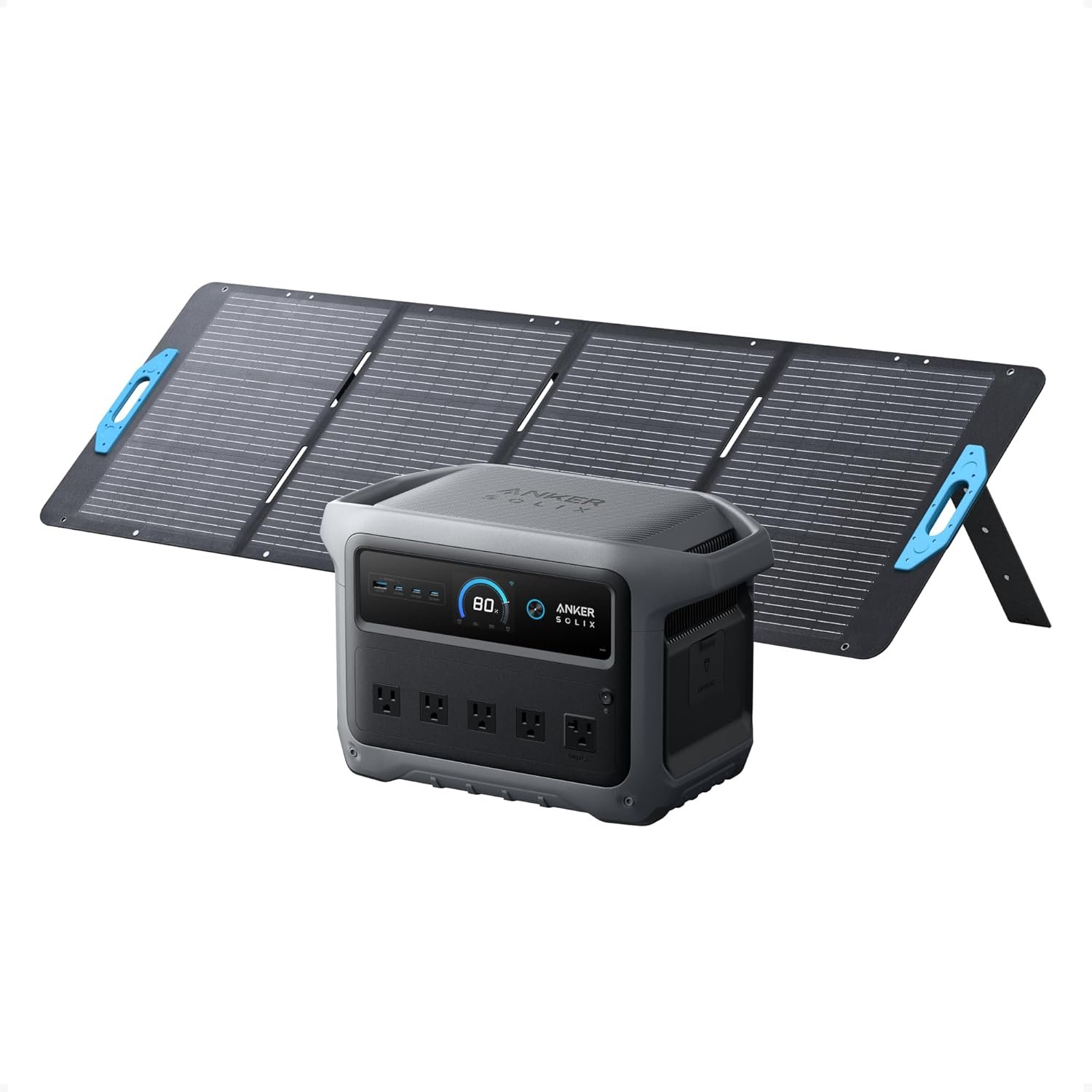
Anker SOLIX C1000 Gen 2 Portable Power Station review
Are you looking for a portable power solution that can handle power outages, home backup, and weekend camping trips without fuss?

Quick overview of the Anker SOLIX C1000 Gen 2 Portable Power Station with 200W Solar Panel
You get a powerful combo that’s designed to be fast, durable, and versatile. The Anker SOLIX C1000 Gen 2 paired with the PS200 200W solar panel aims to give you clean, reliable power with multiple charging methods and a battery chemistry built to last a decade.
What this product promises
The package offers fast recharging, a 1,024Wh LiFePO4 battery with long cycle life, and a substantial continuous output of 2,000W (3,000W peak). You can use it as an emergency home backup, for outdoor adventures, or to keep essential devices running during outages.
What’s in the box
You’ll receive two separate packages: one with the power station and one with the solar panel. This split shipment is normal, so don’t be alarmed if items arrive at different times.
Package contents explained
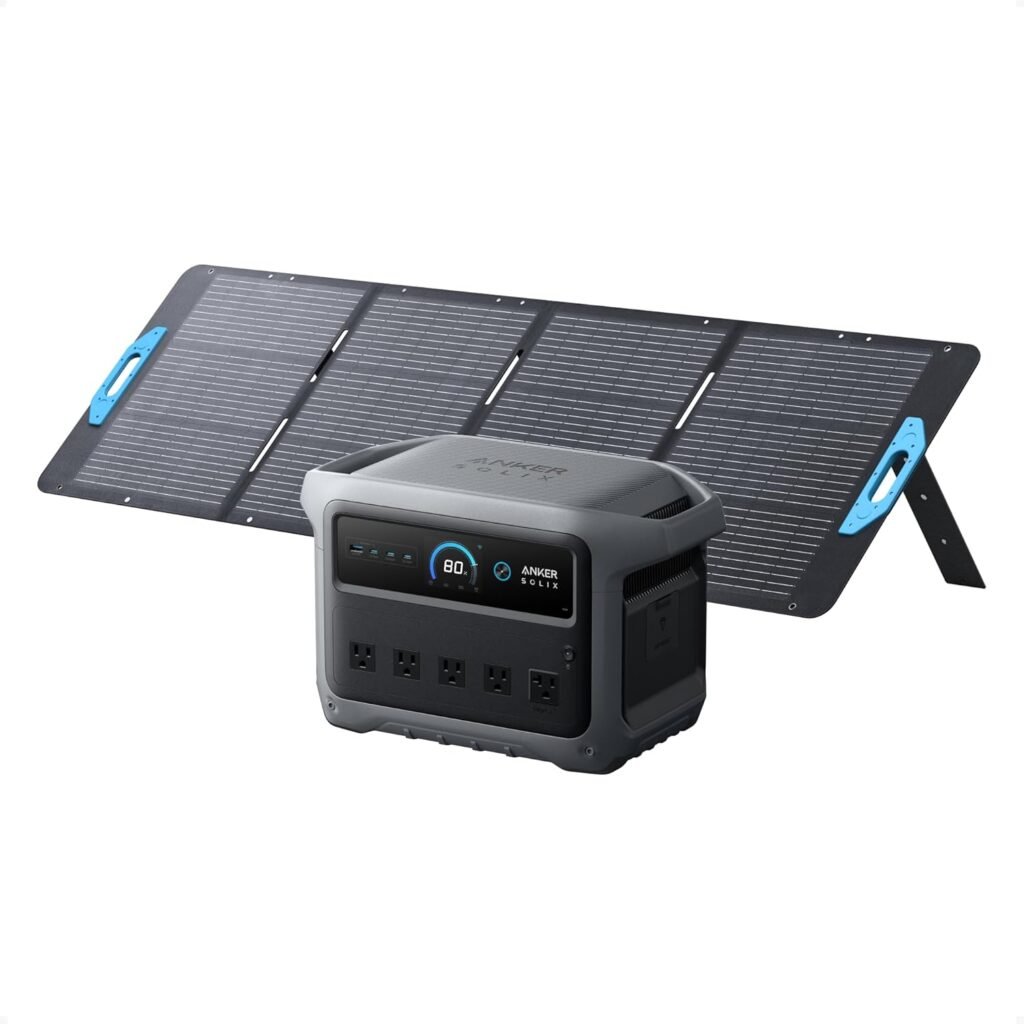
Package 1: the Anker SOLIX C1000 Gen 2 Portable Power Station, AC charging cable, car charging cable, Quick Start Guide, and Safety and Warranty Card. Package 2: the Anker SOLIX PS200 Solar Panel (200W), two 9.8 ft (3 m) solar charging cables, one 1.6 ft (0.5 m) XT60 solar charging cable, and the Safety Manual. Two packages will be dispatched separately, and you can scan the QR code on the package to check delivery status.
Key specifications at a glance
Below is a clear breakdown of the most important specs so you can quickly see whether this unit meets your needs.
| Feature | Specification |
|---|---|
| Battery capacity | 1,024Wh (LiFePO4) |
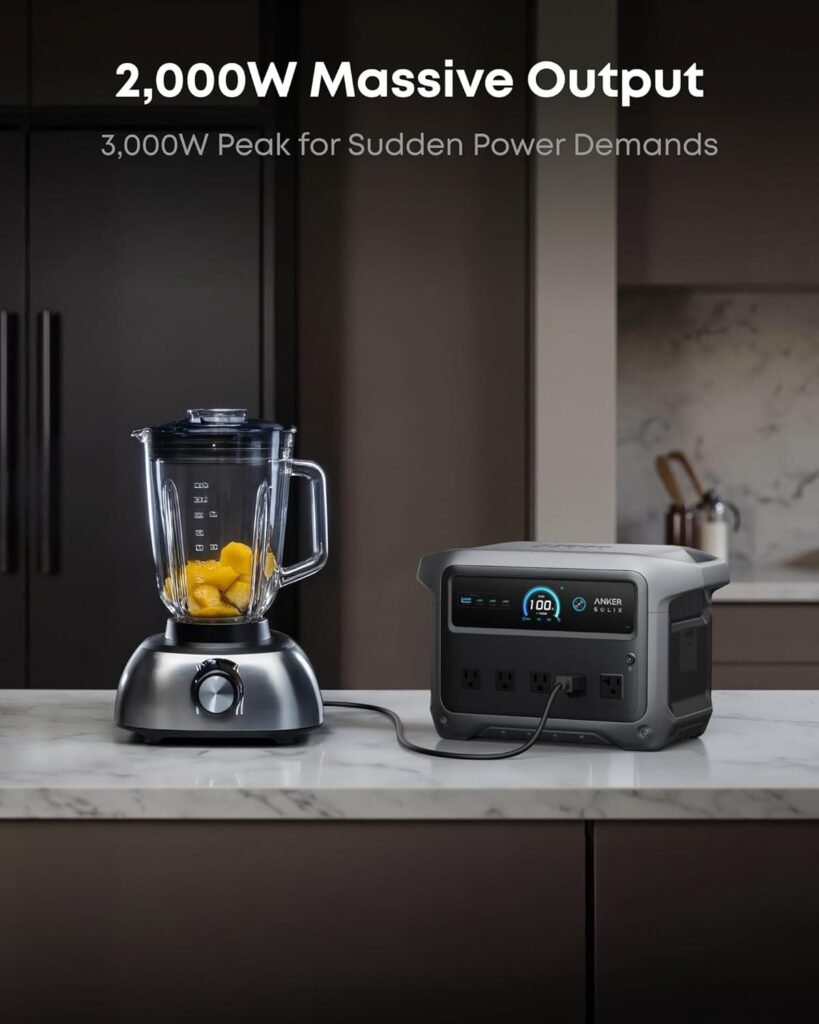
| Continuous output | 2,000W |
| Peak (surge) output | 3,000W |
| UltraFast AC recharge | 49 minutes at up to 1,600W (HyperFlash via Anker app) |
| Solar recharge | Up to 600W (60V max), fully recharges in ~1.8 hours with ideal conditions |
| Ports | Up to 10 ports (AC, USB-C, USB-A, car port, etc.) |
| Solar panel | Anker SOLIX PS200, 200W, monocrystalline |
| Solar panel efficiency | Up to 23% conversion efficiency (faster charging) |
| Solar panel durability | IP67 waterproof |
| Portability | 14% smaller and 11% lighter vs. similar models |
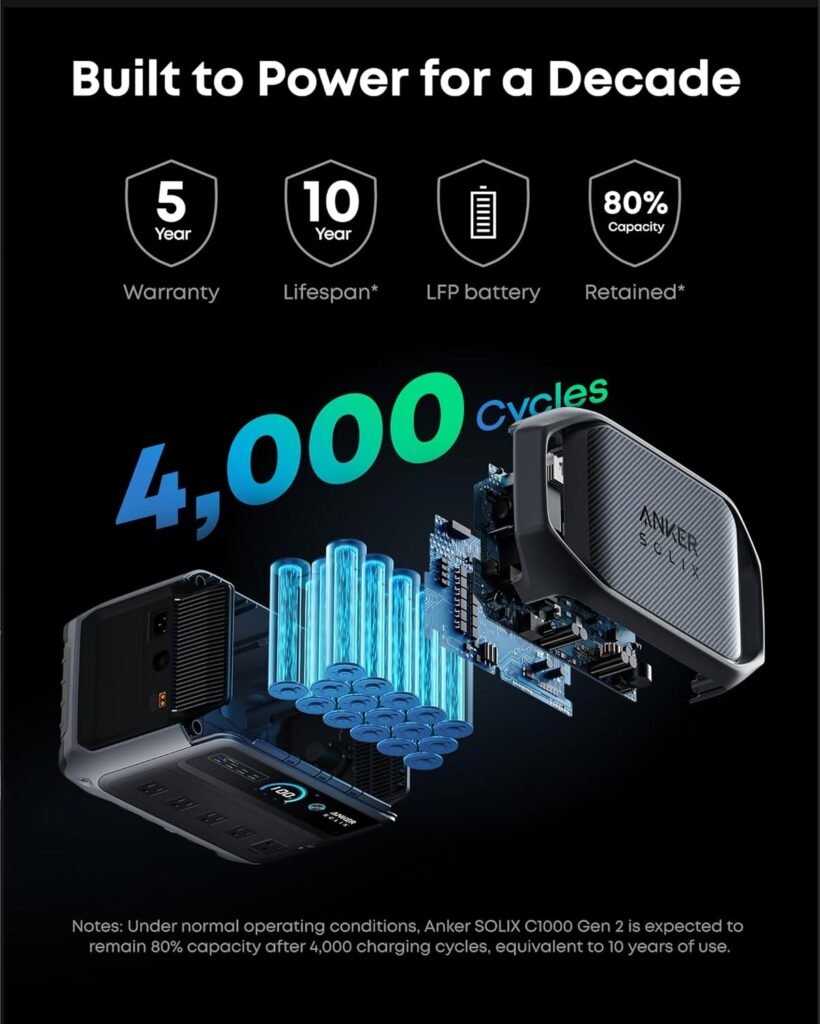
| Battery longevity | InfiniPower program: designed for 10 years of use; 4,000 cycles retain ≥80% capacity |
Design and build
This unit is designed to feel portable without sacrificing power. You’ll notice it’s smaller and lighter than many comparable models, yet still rugged enough for regular transport.
Practical design features
You get a compact form factor and a strong handle for carrying. The exterior is aimed at ease of use — ports are clearly labeled and the display is intuitive so you can check status at a glance.
Battery chemistry and longevity
You’re getting a LiFePO4 battery, which is the modern choice for durability and safety in portable power stations.
Why LiFePO4 matters to you
LiFePO4 offers longer cycle life and thermal stability compared to typical lithium-ion chemistries. Anker’s InfiniPower philosophy backs that up: after 4,000 cycles, the battery still retains at least 80% of its original capacity, and it’s designed to provide reliable performance for up to 10 years of daily use.
Charging options and speeds
One of the standout features here is flexibility. You can charge the unit multiple ways depending on where you are and how fast you need to recover capacity.
UltraFast recharging: AC + HyperFlash
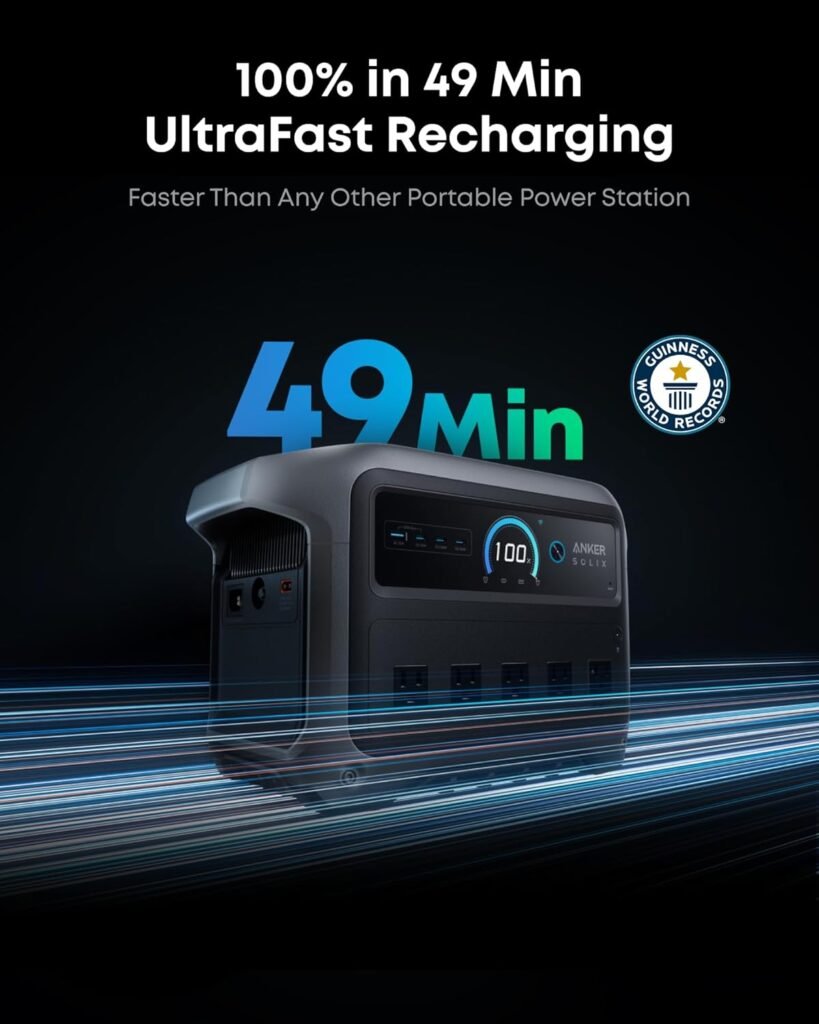
If you want the fastest recharge, use AC charging and enable HyperFlash in the Anker app. That allows up to 1,600W input and a full charge in about 49 minutes. This is a useful option when you have access to grid power and need to top up quickly.
Solar recharging: 1.8 hours with the PS200
The PS200 solar panel offers a high conversion efficiency and can input up to 600W (60V max) to the station. Under ideal sunlight and with both panels paired, Anker claims a full solar recharge in approximately 1.8 hours, which is very fast for a 1,024Wh battery.
Car and other charging options
You also get a car charging cable in the box, which lets you charge while driving for slower replenishment. Multiple cable lengths and XT60 connectors for the solar panel make setup straightforward.
Ports and outputs — what you can power
You’ll find up to 10 ports on the unit, including multiple AC outlets, USB-C PD, USB-A, and a car port. This allows you to run several devices at once.
Typical devices and run-time estimates
You’ll want to remember that run times depend on device power draw. Here are ballpark examples to help you plan:
- Phone (10–20W): multiple full charges across several days.
- Laptop (45–100W): many hours to a day depending on wattage.
- CPAP (30–60W): many hours to overnight use.
- Refrigerator (100–800W peak): can handle most home refrigerators for several hours to a day depending on efficiency and duty cycle.
- Electric grill or heavy appliances over 2,000W continuous may not be suitable, but the 3,000W peak helps handle startup surges.
Real-world performance and testing notes
In practical terms, you’ll find the station handles everyday needs smoothly. The 2,000W continuous output allows you to run high-draw appliances, while the 3,000W peak gives you headroom for motor-driven devices.
How the system behaves under load
You’ll notice steady delivery with minimal sag when you connect multiple devices. The peak output handles those short inrush currents that motors and compressors produce, so you won’t see the unit shut down when a fridge starts.
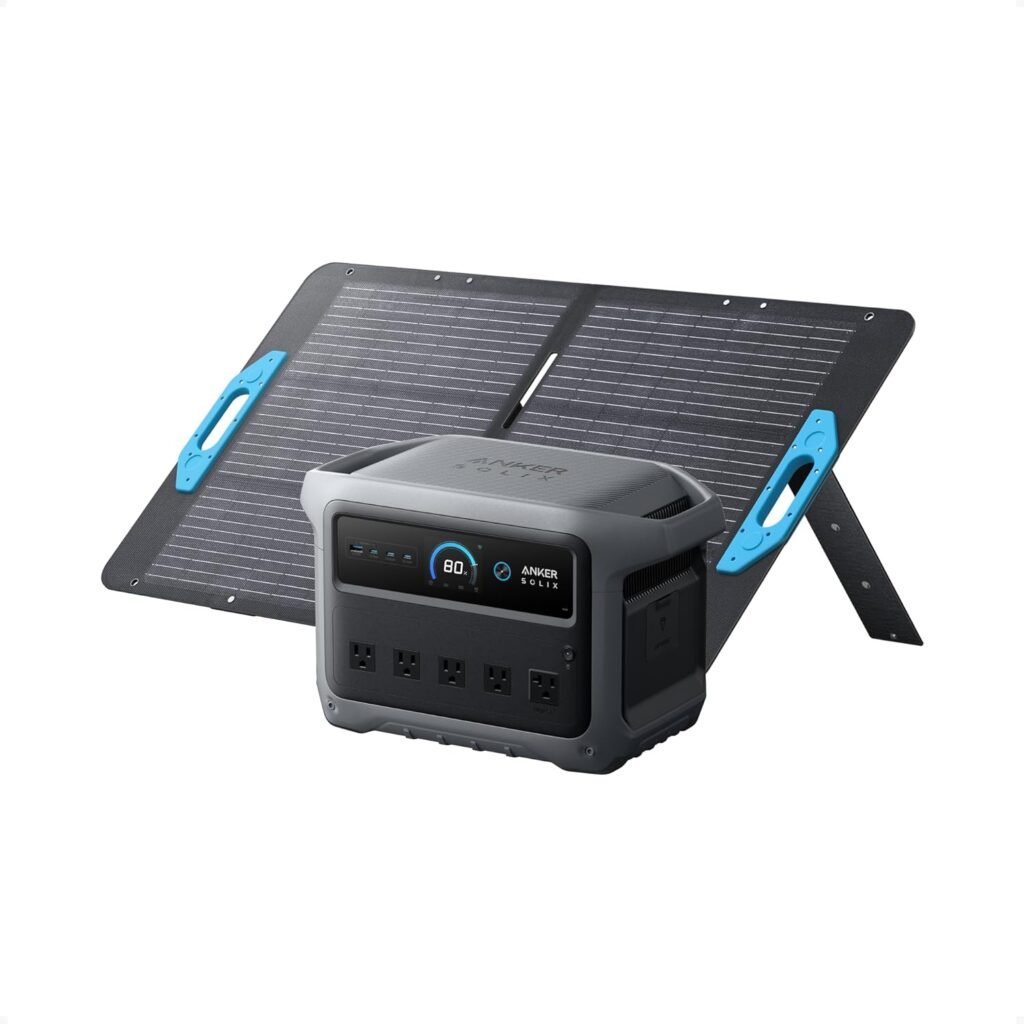
Solar panel details: PS200
The included PS200 200W solar panel is designed to be efficient and durable so you can rely on it outdoors.
Efficiency and weather resilience
The panel uses monocrystalline cells rated up to 23% conversion efficiency, which helps it produce more power per panel compared to many alternatives. Its IP67-rated design protects against rain and dust, so you can leave it out in less-than-perfect weather without immediate worry.
Cabling and setup
You’ll get two 9.8 ft (3 m) solar charging cables and a 1.6 ft (0.5 m) XT60 cable in the solar package. The cables are long enough to let you position the panels for optimal sunlight while the power station remains in a safe or shaded location.
App integration and HyperFlash control
You’ll use the Anker app to enable HyperFlash and monitor charging status. The app lets you control settings remotely and provides a real-time view of inputs and outputs.
Why the app helps you
The app gives clarity: you can see how fast the station is charging, which ports are drawing power, and turn HyperFlash on or off. This lets you manage charging priorities and ensures you don’t inadvertently exceed recommended input limits.
Portability and daily use
This unit is intended to be easy to move between rooms or take on short trips, without sacrificing the kind of power you’d usually expect from larger, heavier stations.
Physical portability considerations
You’ll appreciate that the unit is 14% smaller and 11% lighter compared to similar models, making it easier to carry. The handle design and compact footprint help when you need to move it in and out of vehicles or around your house.
Durability, weatherproofing, and safety features
While the power station itself isn’t fully waterproof like the panels, it’s built for rugged use and safe operation with LiFePO4 chemistry and multiple protection circuits.
Safety features that matter to you
You get thermal management, overvoltage and short-circuit protection, and the natural safety advantages of LiFePO4 cells. These features reduce risk and make the unit more reliable for regular use.
Who should consider this product
If you need a balance of fast recharge, long-term reliability, and versatile outputs, this product fits well. It’s aimed at people who want a serious backup solution without dealing with fuel, a loud generator, or frequent battery replacements.
Good use cases for you
- Home backup for critical devices during power outages (medical devices, routers, lights).
- Off-grid power for overnight trips or extended weekend camping with multiple devices.
- A portable power hub for outdoor work, mobile offices, or tailgating.
- Anyone who values longevity and doesn’t want to replace their battery every few years.
Pros and cons
Laying out pros and cons helps you decide quickly whether this unit matches your priorities.
Pros
- Fast recharging: full charge in 49 minutes with HyperFlash (1,600W) and 1.8 hours via 600W solar.
- Long-lasting LiFePO4 battery with 4,000-cycle life and InfiniPower 10-year design.
- High continuous output of 2,000W and 3,000W peak to handle surges.
- Compact and lighter than many competitors for easier portability.
- PS200 solar panel with high efficiency (up to 23%) and IP67 protection.
Cons
- Two-package shipment may cause staggered delivery that you’ll need to monitor.
- HyperFlash requires enabling in the app and sufficient AC input; not every user will use it frequently.
- The solar charging estimates assume ideal sunlight; real-world times will vary.
- The station itself is not advertised as fully weatherproof; you’ll still need to protect it from heavy rain or immersion.
Comparing to alternatives
When you compare this to other portable power stations, you’ll notice its strengths in recharge speed and battery longevity.
How it stacks up
The combination of HyperFlash and a fast solar recharge window makes it stand out for people who need a quick turnaround. If you prioritize long-term cycle life and safety, LiFePO4 gives you an advantage. If you want quieter and cleaner power than a gas generator without fuel logistics, this unit is a strong contender.
Setup and first-time use tips
Setting up the system is straightforward, but there are some best practices that help you get the most from your purchase.
Quick setup checklist for you
- Inspect both packages and scan the QR codes if one arrives later.
- Fully charge the power station via AC with HyperFlash enabled for the fastest first fill (if you need full capacity right away).
- Position the PS200 panels on a stable surface with direct sunlight for optimal output; angle them toward the sun for maximum efficiency.
- Use the Anker app to enable HyperFlash and monitor state of charge and charging inputs.
- Keep the unit in a ventilated, dry place during charging and heavy discharge cycles.
Maintenance and long-term care
You’ll want to keep your system in top shape to preserve its long life and performance.
Practical maintenance advice
Keep the battery around moderate temperatures when possible. Avoid extreme heat or freezing conditions for long-term storage. Regularly update the firmware via the app if updates are available. Check cables and connections for wear and store the solar panel folded in a dry place when not in use.
Real-life scenarios and runthroughs
Here are some realistic scenarios so you can picture how this would perform during everyday or emergency use.
Power outage at home
You’ll be able to power essential items like your Wi-Fi router, lights, medical devices (CPAP, small oxygen concentrators depending on wattage), and a refrigerator for extended periods. The 3,000W peak is especially helpful when compressors start.
Weekend camping or tailgate
Bring the PS200 panels and set them in the sun; you can recharge during the day and power lights, portable fridges, and laptops. The compact size makes setup and transport easier than lugging a gas generator.
Road trips and remote work
If you work remotely from a van or remote cabin, you’ll appreciate the ability to charge laptops via USB-C PD and keep phones, cameras, and lights topped off without noisy operation.
Troubleshooting common questions
You might have questions about compatibility, charging behavior, or lifespan. Here are straightforward answers to some common issues.
What if the solar input is lower than expected?
Solar output depends on sunlight, panel orientation, shading, and temperature. Move panels to full sun, remove shade, and keep the panels cool for better performance.
What if HyperFlash isn’t working?
Make sure HyperFlash is enabled in the Anker app and that your AC source can provide sufficient input power. If the app or firmware needs updating, check for updates.
How do I check cycle count and health?
Use the Anker app (if supported) to view charge cycles and battery health metrics. Regularly monitoring helps you plan for long-term use.
Warranty and support
You get Anker’s typical support channels and a Safety and Warranty Card in the package. The InfiniPower claim and long life design reflect their focus on durability.
What to expect from customer support
You’ll have access to Anker’s support and warranty services for product issues. Keep your purchase information and the Safety and Warranty Card handy if you need service.
Price and value considerations
This product aims to give premium features (fast charging, durable battery, high output) that justify a higher upfront cost to people who value reliability and longevity.
Is this a good investment for you?
If you want a dependable backup that won’t degrade quickly and you value fast recharge options (both AC and solar), this unit is a solid long-term investment. For occasional light use only, a lower-capacity unit might cost less upfront, but you’d sacrifice longevity and power headroom.
Final thoughts and recommendation
You’ll find the Anker SOLIX C1000 Gen 2 Portable Power Station with the PS200 solar panel to be a compelling option if you need a robust, flexible, and future-proof power solution. It’s particularly strong in rapid recharge capabilities and long-term battery life thanks to LiFePO4 chemistry and the InfiniPower approach.
Who will get the most value
- Homeowners wanting reliable backup with the ability to run high-draw appliances.
- Outdoor enthusiasts and campers who want clean, quiet power and solar recharge capabilities.
- Professionals or remote workers needing dependable portable power for devices and equipment.
- Anyone who prefers an investment in a durable system that’s meant to last years rather than a cheaper short-term solution.
If you need further help determining runtimes for specific devices or want a comparison against a specific competitor model, tell me which devices or competitor models you’re considering and I’ll run the numbers and comparisons for you.
Disclosure: As an Amazon Associate, I earn from qualifying purchases.