
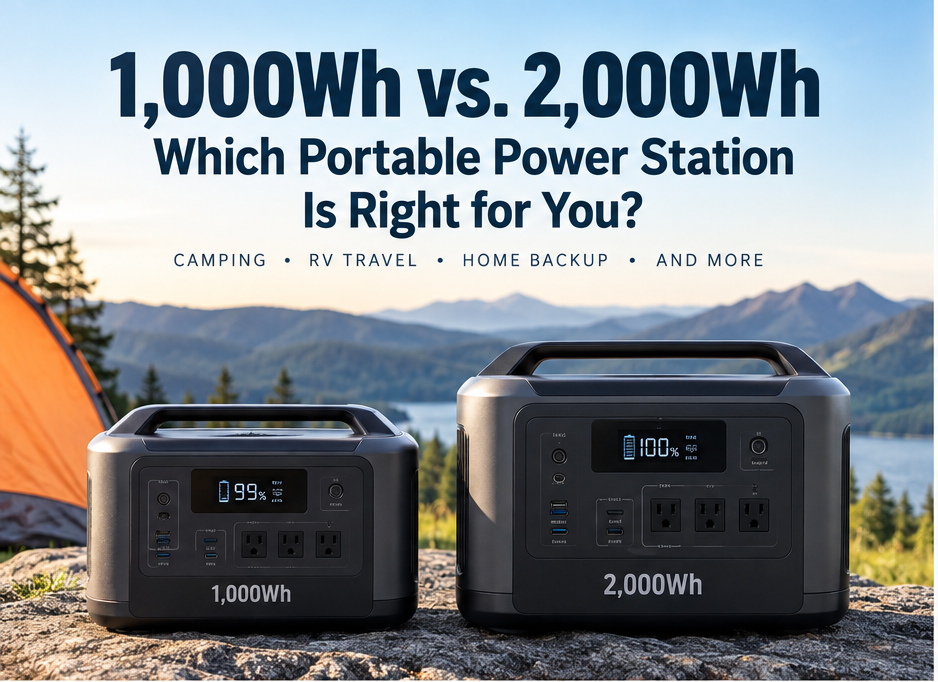
1,000Wh vs 2,000Wh Power Stations: Which Size Do You Really Need?
1,000Wh vs. 2,000Wh Power Stations: Which Size Do You Really Need?
A bigger battery is not always the better choice. The right portable power station depends on what you need to run, how long you need backup power, and how much weight you want to carry.
A 1,000Wh power station can be a practical choice for camping, travel, phones, laptops, lights, and smaller everyday devices. A 2,000Wh model provides more stored energy for refrigerators, multiple devices, RV equipment, and longer power outages.
What Do Watt-Hours Mean?
Before comparing 1,000Wh and 2,000Wh power stations, it helps to understand what the watt-hour rating means. Watt-hours, written as Wh, describe how much energy a battery can store.
Think of watt-hours as the size of the power station’s fuel tank. A larger Wh rating generally means the battery can run devices for a longer period of time, although actual runtime depends on the device, power demand, and energy lost during conversion.
Watt-Hours vs. Watts
Watts measure how much power a device uses at a particular moment. Watt-hours measure how much energy a battery stores over time.
- Watts: How much power a device needs to operate.
- Watt-hours: How much energy the power station can store.
- Higher wattage: Uses the battery faster.
- Higher watt-hours: Usually provides longer runtime.
For example, a small LED light may use only a few watts, while a refrigerator or electric heater may require much more power. The battery capacity tells you how long the power station may last, while the inverter’s output rating determines whether it can run the device in the first place.
1,000Wh vs. 2,000Wh Power Stations
The biggest difference between these two sizes is stored energy. A 2,000Wh power station can generally store about twice as much energy as a 1,000Wh model. That does not mean every device will run for exactly twice as long, but it provides more flexibility when power needs increase.
1,000Wh Power Station
A 1,000Wh power station is often a practical choice for lighter power needs and situations where portability matters.
- Phones, tablets, and laptops
- LED lights and small electronics
- Camping and weekend trips
- Small home office setups
- Short-term emergency charging
- Usually easier to carry and store
2,000Wh Power Station
A 2,000Wh power station is better suited to larger loads, longer outages, and situations where several devices need power at the same time.
- Refrigerators and freezers
- Multiple devices running together
- RV equipment and longer trips
- Home office backup for longer periods
- Longer emergency power support
- More reserve capacity for unexpected needs
How Long Will a 1,000Wh or 2,000Wh Power Station Run?
Runtime depends on the device’s wattage, the power station’s usable battery capacity, and energy lost through the inverter. The examples below are estimates for comparison, not guaranteed runtimes.
| Device | Example Power Use | 1,000Wh Estimate | 2,000Wh Estimate |
|---|---|---|---|
| Phone charger | 10W | Many charges | Many more charges |
| LED light | 10W | Several days of occasional use | Several days with more reserve |
| Laptop | 60W | About 14 hours | About 28 hours |
| Wi-Fi router | 15W | About 56 hours | About 112 hours |
| Small refrigerator | Variable | Depends on cycling and startup demand | More reserve for longer backup |
Which Size Is Best for Your Situation?
The best capacity depends on how you plan to use the power station. A smaller unit may be easier to carry, while a larger unit can provide more flexibility during longer trips or power outages.
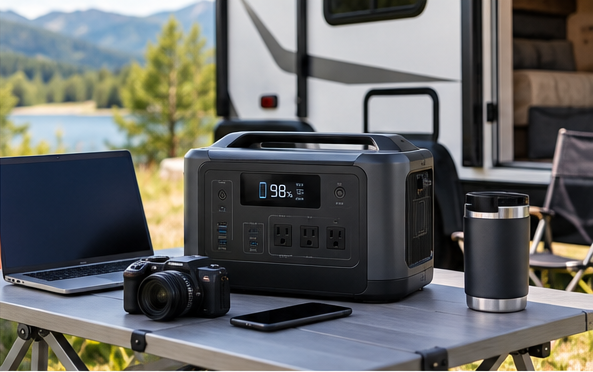
Camping and Weekend Trips
A 1,000Wh power station is often enough for phones, cameras, lights, laptops, and other small electronics. It is usually the more convenient choice when storage space and portability matter.
RV and Extended Travel
A 2,000Wh power station may be a better fit for longer trips, multiple travelers, and higher-demand RV equipment. Always check the equipment’s wattage before connecting it.
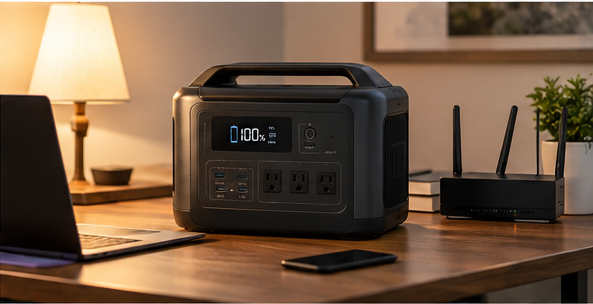
Home Office Backup
A 1,000Wh model can support a laptop, monitor, router, and desk lamp for a limited period. A 2,000Wh model provides more reserve if you need to work through a longer outage.
Emergency Home Backup
A 2,000Wh power station is generally the better choice when you want to keep more devices operating, support a refrigerator, or prepare for outages that may last many hours.
Other Factors to Consider Before Buying
Battery capacity is important, but it is not the only factor that separates a good power station from one that may not fit your needs. Charging speed, solar capability, weight, and durability can all affect how useful the unit will be.
Charging Speed
A power station that charges quickly can be especially helpful before a storm or during an emergency. Look at how long it takes to recharge from a wall outlet and whether the unit supports faster charging modes.
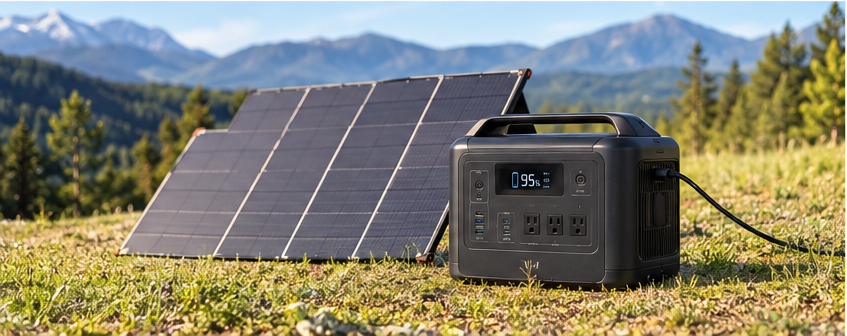
Solar Charging
Solar input can extend your access to power when the electrical grid is down. Check the supported solar input, connector type, and whether the power station can accept the solar panels you already own.
Weight and Portability
A 2,000Wh power station normally weighs more than a 1,000Wh model. If you plan to move it frequently, use it for camping, or load it into a vehicle, handles, wheels, and overall size become important.
Durability and Warranty
Look for a sturdy design, clear operating instructions, and a warranty that matches your intended use. A power station used for emergency backup should be easy to store, maintain, and check periodically.
- Check the continuous AC output and surge rating.
- Confirm that the outlets match the devices you plan to use.
- Compare USB, DC, and AC charging options.
- Look at battery chemistry and expected cycle life.
- Consider noise levels if you will use it indoors or while sleeping.
- Make sure the unit can be safely stored in the space available.
Frequently Asked Questions
Is a 2,000Wh power station twice as useful as a 1,000Wh model?
Not necessarily. A 2,000Wh power station stores roughly twice as much energy, but the best choice depends on what you need to run. A 1,000Wh model may be more practical for camping, travel, and smaller electronics, while a 2,000Wh model is better suited for longer backup periods and multiple devices.
How long will a 1,000Wh power station last?
Runtime depends on the wattage of the devices being used. A laptop, router, lights, and other small electronics may run for many hours. Larger appliances will use the battery much faster. Actual runtime will also depend on inverter losses and the power station’s usable battery capacity.
Can a 1,000Wh power station run a refrigerator?
It may be able to run a small refrigerator for a limited period, but refrigerator power use changes as the compressor starts and stops. Before buying, check the refrigerator’s running wattage, startup surge requirements, and the power station’s continuous and surge output ratings.
Is a 2,000Wh power station better for home emergencies?
A 2,000Wh model is often the better choice when you need longer backup time or want to operate several devices together. It can be especially useful for keeping communication equipment, lights, laptops, and selected appliances running during an outage. It still may not be enough for large electric heating or cooling systems.
Does a larger power station take longer to charge?
It can, depending on the charger and charging technology. Some larger models support faster AC charging or higher solar input, while others may take considerably longer. Always compare the charging specifications rather than judging charging speed by battery size alone.
Should I choose a 1,000Wh or 2,000Wh power station for camping?
A 1,000Wh model is usually easier to transport and may be enough for lights, phones, laptops, cameras, and other basic camping equipment. A 2,000Wh model makes more sense for longer trips, RV equipment, refrigerators, cooking devices, or multiple people sharing one power station.
Still Unsure Which Size You Need?
Use our portable power station calculator to estimate the battery capacity you may need based on your devices, backup time, and intended use.
Use the Power Station CalculatorFinal Verdict: Which Size Should You Choose?
The right power station depends on how you plan to use it. A larger battery is not automatically the better choice if you mainly need portable power for short trips or small electronics.
Choose a 1,000Wh power station if you want a practical, easier-to-carry option for camping, travel, laptops, lights, phones, and other smaller devices.
Choose a 2,000Wh power station if you need longer backup time, want to operate several devices, use an RV, or plan to power selected appliances during an outage.
Before making a purchase, compare more than battery capacity. Check the continuous AC output, surge rating, charging speed, solar input, battery chemistry, weight, warranty, and the types of outlets included.
In short, a 1,000Wh model is often the better value for basic portable power, while a 2,000Wh model offers more flexibility when longer runtime and heavier workloads matter most.