
MidNite MNPowerflo5 Battery Review: Home Backup Guide
MidNite MNPowerflo5: A Building Block for Home Backup
Looking beyond portable power stations? This MidNite MNPowerflo5 battery review explains what the rack-mount battery offers, how to estimate backup runtime, and what else you need to build a working system.
The most important buying decision is whether you want a modular, installed backup system or the convenience of an all-in-one portable power station.
Review approach: This is a specifications-based buying guide using published product information. We have not personally tested this battery. Runtime examples are calculations, not test results.
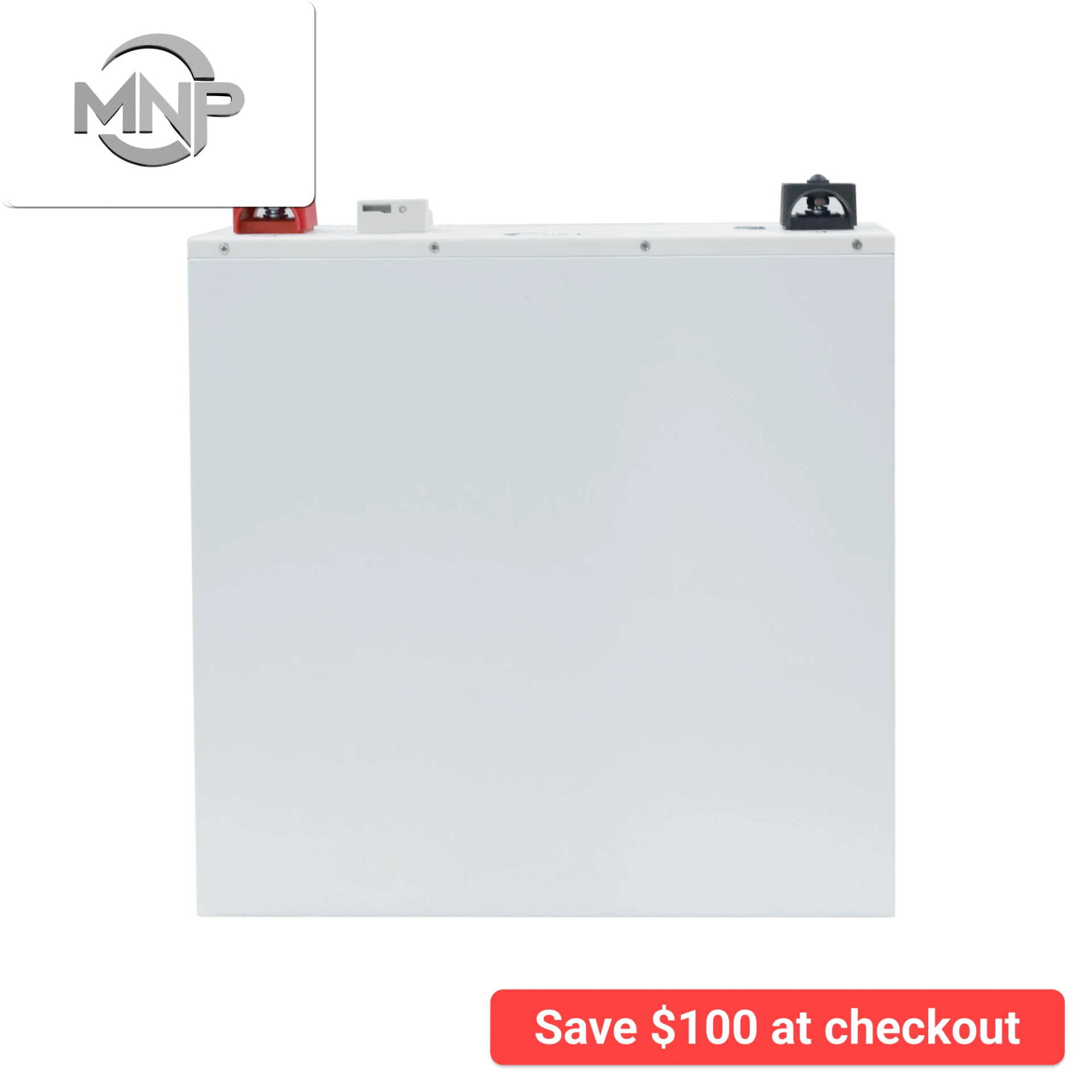
Quick Take: Who Should Consider It?
The MNPowerflo5 belongs on your shortlist if you are planning a dedicated battery bank for home backup or an off-grid property. Its modular format makes it worth investigating when you want to choose the inverter and storage capacity separately.
Before buying, price the entire installation. A battery-only price does not include everything required to run household appliances, recharge from solar, or connect backup power to home circuits.
A Potential Fit For
- Homeowners planning an installed backup system.
- Off-grid cabin owners designing a compatible battery bank.
- Buyers who want to expand storage in stages.
- Existing system owners with verified inverter compatibility.
Consider a Portable Station If
- You need built-in household outlets.
- You want power for camping or frequent travel.
- You prefer an integrated charging system.
- You want a simpler way to power individual plug-in devices.
MidNite MNPowerflo5 Specifications
| Specification | Published Value |
|---|---|
| Energy capacity | 5.12kWh / 5,120Wh |
| Nominal voltage | 51.2V; marketed for 48V systems |
| Capacity | 100Ah |
| Chemistry | Lithium iron phosphate (LiFePO4) |
| Nominal charge / discharge current | 75A / 75A |
| Maximum discharge current | 100A |
| Expansion | Up to 16 units in parallel, subject to system requirements |
| Installation | Indoor, rack mount; IP20 |
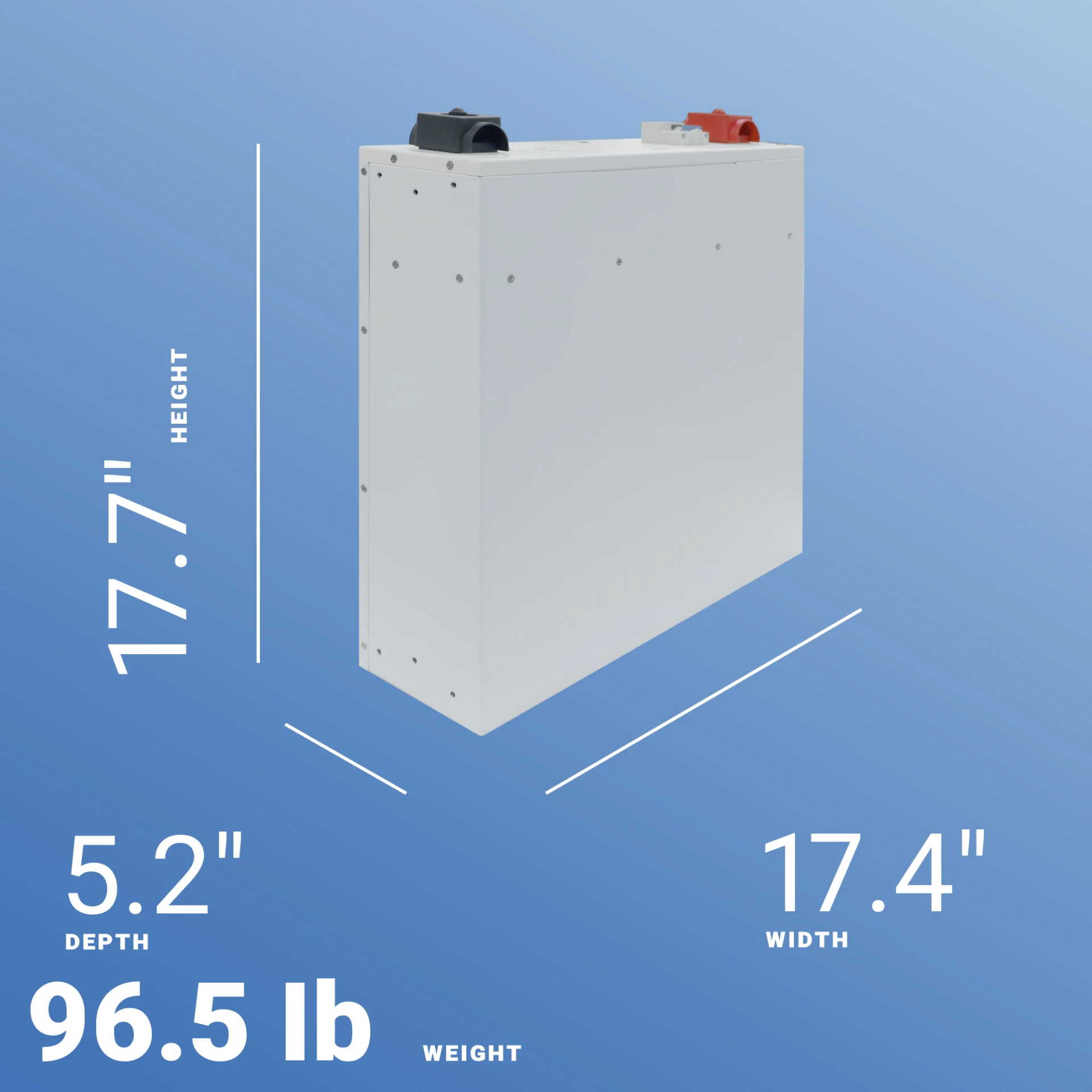
| Weight | 96.5 pounds |
| Dimensions | Approximately 17.7 × 17.4 × 5.2 inches |
| Charging temperature | 32°F to 122°F |
| Discharging temperature | -4°F to 122°F |
| Warranty | 10-year limited warranty; terms apply |
How Long Could It Run Your Essentials?
Start by adding the average power consumption of the devices you want to keep running. Then divide the estimated usable energy by that combined load.
For illustration, the table below assumes 4,096Wh reaches the appliances—80% of the battery’s nominal capacity. This is a planning assumption allowing for reserve and losses, not a manufacturer-rated usable capacity or a measured result.
| Combined Average AC Load | Illustrative Runtime |
|---|---|
| 100 watts | About 41 hours |
| 200 watts | About 20.5 hours |
| 400 watts | About 10.2 hours |
| 800 watts | About 5.1 hours |
| 1,500 watts | About 2.7 hours |
Calculation: 5,120Wh × 0.80 ÷ average load in watts. These examples assume no charging during use. Inverter standby consumption, battery age, temperature, and reserve settings can shorten runtime, particularly at light loads.
Refrigerators cycle on and off, so their running wattage alone will not give a reliable daily estimate. Measure energy consumption over a representative day, and check that the inverter and battery bank can handle compressor starting demand.
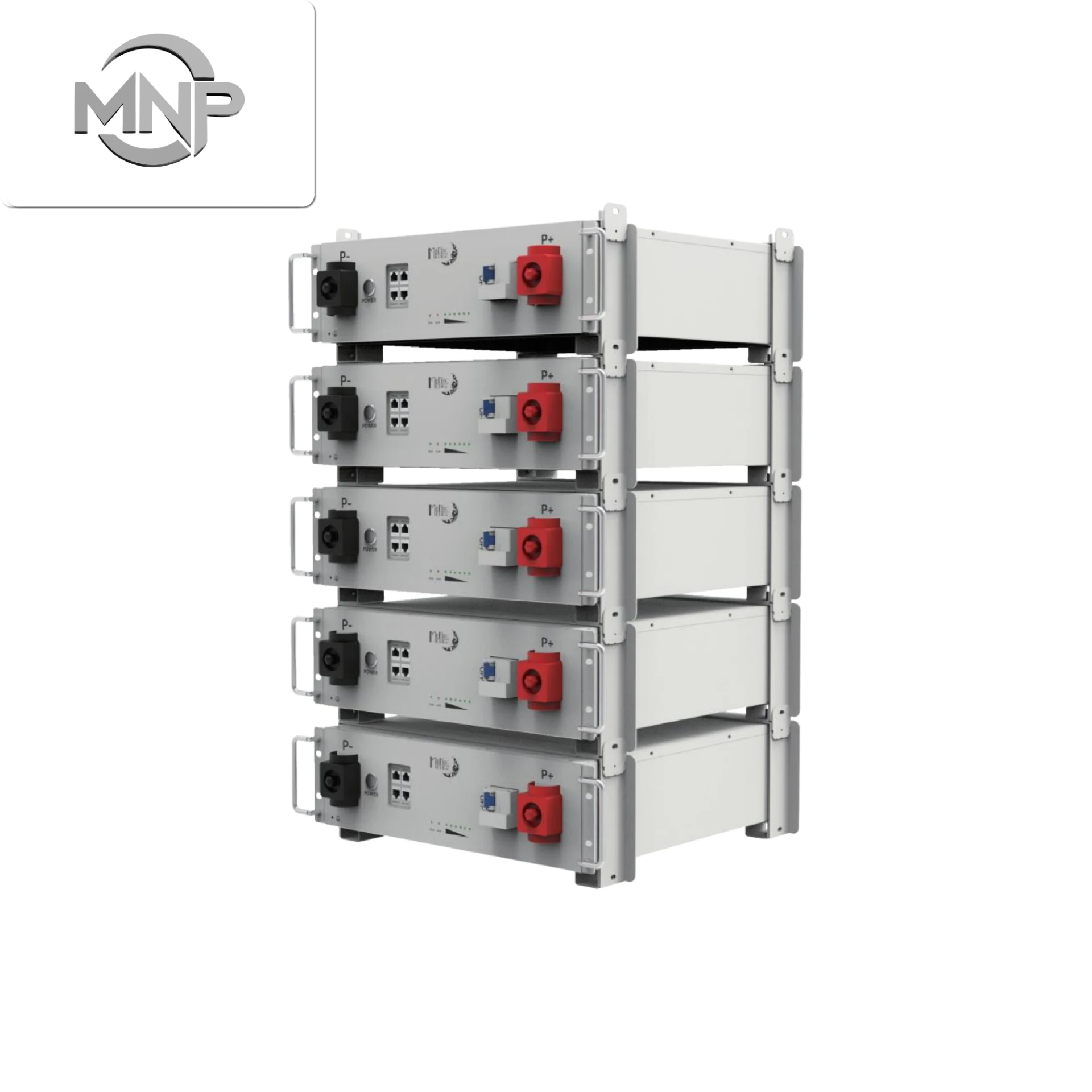
What Else Do You Need?
Treat this battery as one part of a system. Ask your installer or equipment supplier to provide a complete parts list and confirm compatibility before ordering.
- A compatible inverter/charger: It must support the battery’s voltage, charging requirements, and intended backup loads. Confirm communication support for the exact model and firmware.
- Appropriate mounting: Use a suitable rack or manufacturer-approved support with the required load capacity, clearances, and access.
- DC wiring and protection: The design needs correctly sized cables, disconnects, overcurrent protection, and any required busbars.
- A charging source: Solar charging requires compatible panels and charge-control equipment. Grid or generator charging requires an appropriate charger or inverter/charger.
- Backup circuit equipment: Supplying household circuits may require transfer equipment, a critical-loads panel, permits, and professional electrical work.
Rack Battery vs. Portable Power Station
| Buying Consideration | MNPowerflo5 Battery System | Portable Power Station |
|---|---|---|
| Equipment approach | Battery plus separately selected system components | Typically combines battery, inverter, and charging electronics |
| Household outlets | Provided through separate inverter equipment | Usually built into the station |
| Mobility | Intended for a fixed installation | Designed to be moved; weight varies by model |
| Expansion | Requires battery-bank and system design | Depends on the model and approved expansion batteries |
| Cost comparison | Compare the complete installed system | Compare the station plus accessories and any home integration |
If your main goal is powering a few plug-in devices during an outage, compare all-in-one options in our portable power station buying guide . If you are planning dedicated backup circuits, evaluate an installed battery system with a qualified installer.
Advantages and Tradeoffs
Why Consider It?
- A defined storage module for planning a battery bank.
- Expansion potential for future storage needs.
- Freedom to choose compatible inverter equipment.
- A rack format suited to dedicated equipment spaces.
What to Budget For
- Separate inverter and charging equipment.
- Mounting, wiring, protection, and installation.
- A suitable indoor location.
- Compatibility checks before adding more batteries.
Warranty and Buying Checks
The published warranty provides 10-year limited coverage, with prorated full-product replacement after the first year. Purchase documentation, approved-seller requirements, installation conditions, and possible shipping charges matter. Read the applicable warranty for the exact version supplied before buying.
For a useful price comparison, request a quote covering the battery, inverter, mounting, protection, wiring, freight, and labor. Compare systems that support the same loads and backup duration. A low battery-only price can be misleading when the remaining equipment is excluded.
Frequently Asked Questions
Can I plug appliances directly into this battery?
No. Household AC appliances require a compatible inverter and properly designed connections. This battery does not provide the integrated household outlets found on a portable power station.
Can one MNPowerflo5 power my entire house?
Do not assume it can. Available power depends on the inverter and battery-bank limits, while runtime depends on consumption. Start with a list of essential circuits and their starting and running requirements.
Can it charge directly from solar panels?
Solar panels need appropriate charge-control equipment between the array and battery. A compatible hybrid inverter may provide that function. Do not connect panels directly to the battery.
Can I add it to an EcoFlow or BLUETTI power station?
Do not assume compatibility. Portable stations use specific expansion connections and approved batteries. Use only a configuration explicitly supported by the equipment manufacturers.
Will more batteries increase available power?
Additional compatible modules increase stored energy. Whether they also increase available system power depends on the inverter, battery limits, wiring, protection, and approved configuration.
Have you personally tested this battery?
No. This article evaluates published specifications and buying considerations. Runtime examples are illustrative calculations and should not be interpreted as measured performance.
Final Verdict: Is the MNPowerflo5 Worth Considering?
The MidNite MNPowerflo5 is worth investigating for a planned, installed backup system where modular storage is a priority. The deciding factors are inverter compatibility, your essential loads, the installation location, and the complete project cost.
For readers who want integrated outlets and convenient portability, an all-in-one power station may be a better fit. Choose the approach that matches how you will actually use backup power.